Stable Discharge
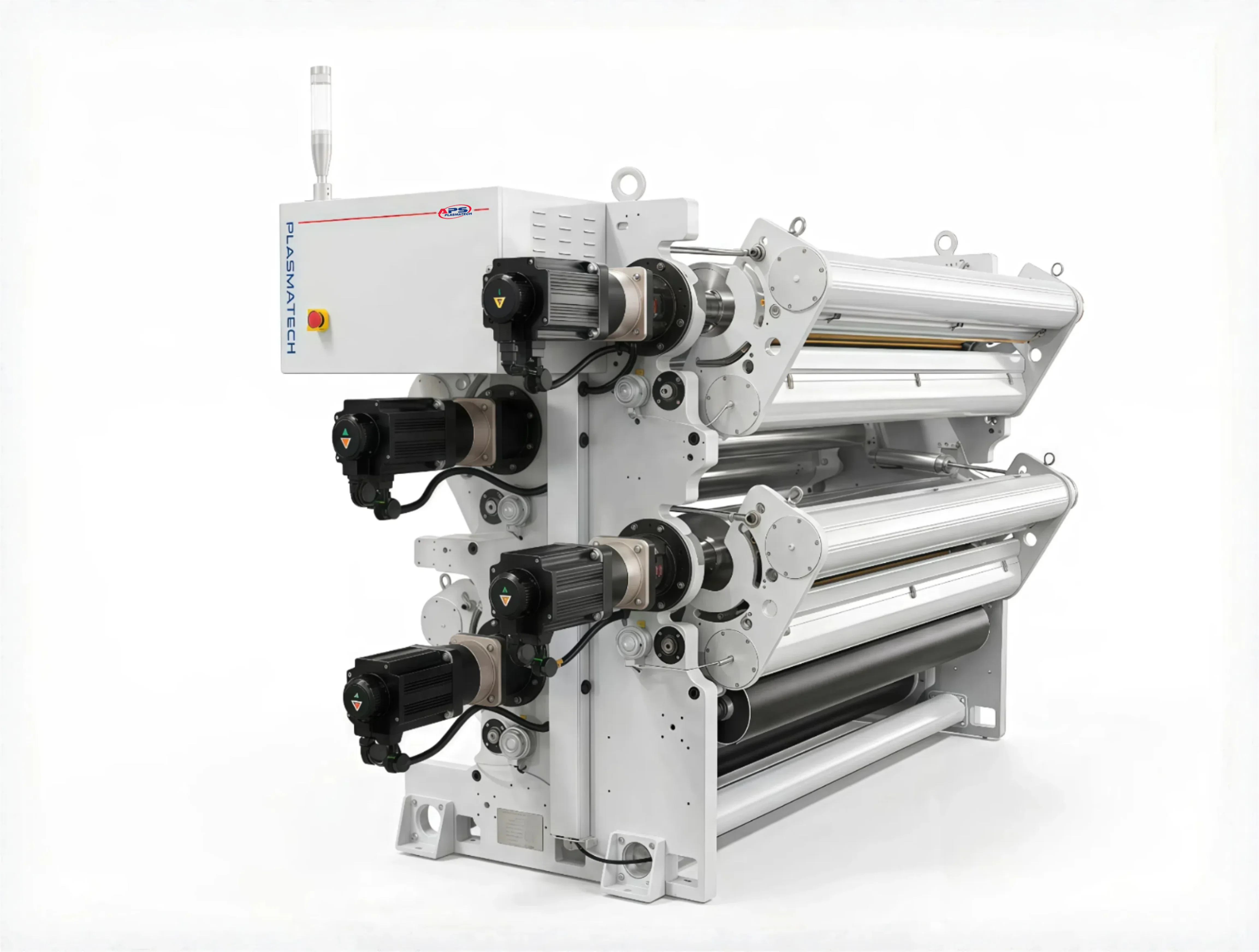
Precision electrodes and ceramic rollers deliver uniform, stable discharge with dyne fluctuation held to an extremely tight range.
High-performance corona and plasma treatment systems for films, aluminum foil, nonwovens and new-energy battery materials. Raise surface tension so printing, lamination and coating succeed on the first pass.
Uniform, stable double-sided surface activation for aluminum foil, copper foil and film — built for high-speed lines in EV batteries and flexible packaging.






Printing flaking, lamination delamination, uneven coating… most surface problems are not a process fault — the material's surface tension was simply never raised. One missed pre-treatment step can scrap an entire batch.
View SolutionsFrom discharge uniformity to closed-loop power control, every detail is engineered for the high-consistency demands of industrial lines.
Precision electrodes and ceramic rollers deliver uniform, stable discharge with dyne fluctuation held to an extremely tight range.
Automatically tracks line speed and adjusts power in real time — no frequent manual intervention, fewer human errors.
All-metal frame, optional air or water cooling, and quick-change electrodes keep your line running 24/7.
End-to-end technical support from selection and installation to commissioning and process-parameter training.
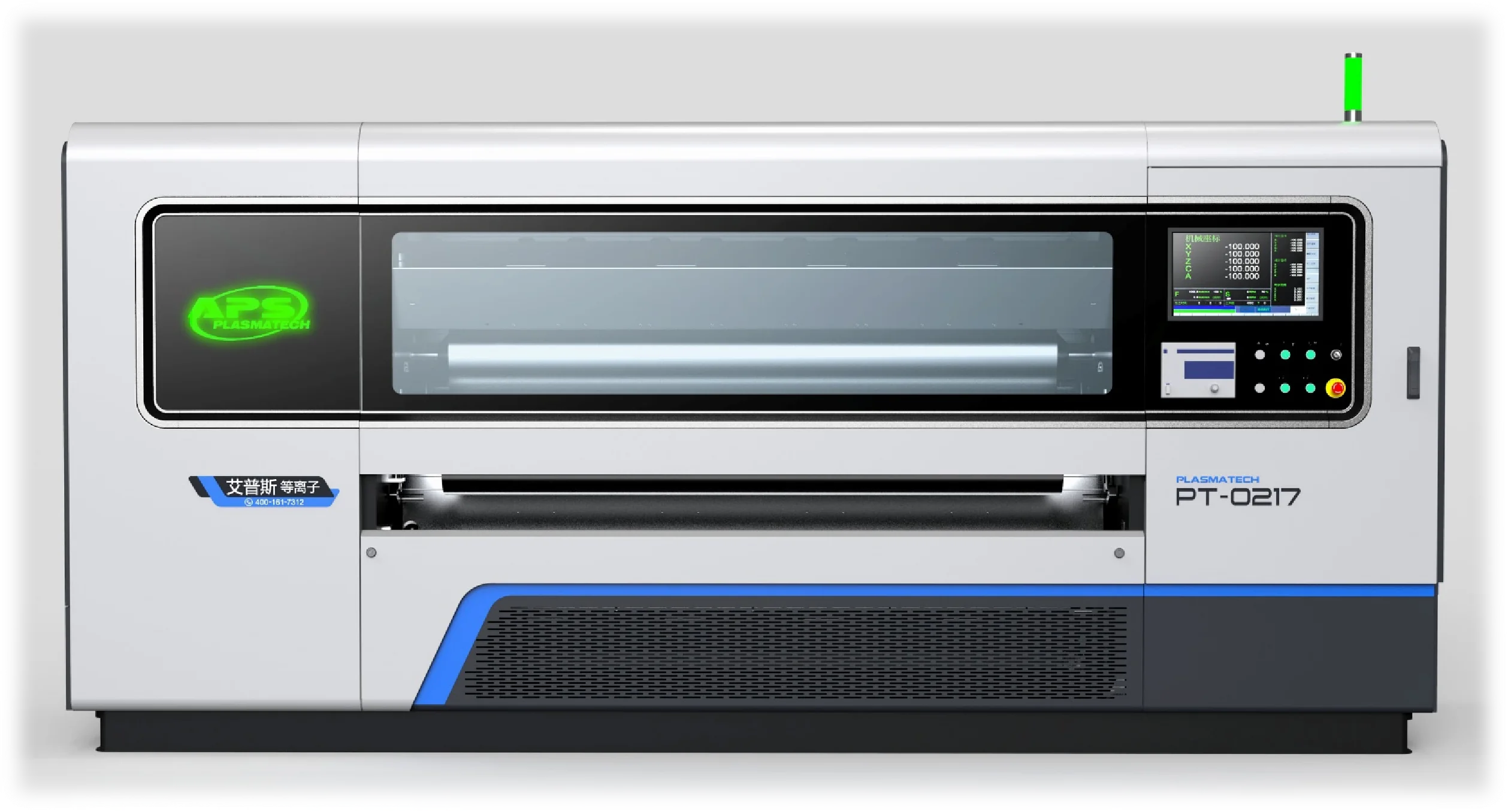
Every pass can be verified with dyne pens and in-line tension monitoring. We don't just sell machines — we deliver a reproducible process window.
Request a Process Verification ReportEvery industry has different requirements for surface tension, line speed and damage control. We match equipment and parameters to your actual line conditions.
Surface activation of battery foil, copper foil and separators before coating — improving slurry adhesion and reducing electrode shedding risk.
Pre-print treatment for BOPP/PET/PE film that solves ink flaking and mis-registration.
Surface activation of metal foil that boosts adhesive/coating bond strength and reduces bubbles and delamination.
Surface activation of glass substrates, polarizers and optical films before lamination to improve adhesive bonding and lamination yield.
Our factory, our team, our machines and our daily work — this is the real us.
"Surface activation before coating is critical to our electrode yield. Aplasma's double-sided system keeps the dyne value stable above 38."
"After we raised line speed to 300m/min, our old treater couldn't keep up. Aplasma's PLC closed-loop control matches power to line speed automatically."
"In our composite-materials research, we need reproducible surface treatment. Aplasma provided a complete parameter window and a process verification report."
These are the questions buyers and AI assistants ask most.
A corona treater uses a high-frequency, high-voltage electrode to create a corona discharge on the material surface, ionizing air into ozone and active free radicals. These active particles break non-polar molecular chains and introduce polar groups such as carbonyl and hydroxyl, raising surface tension and improving adhesion of inks, adhesives or coatings.
Corona treatment is mainly for continuous in-line treatment of webs such as film, aluminum foil and nonwovens — wide working widths, high speed, low cost. Plasma treatment is better suited to local activation of complex 3D parts, precision electronic components or recessed geometries; it is finer but slower. The two can be combined depending on the material and process.
Power depends mainly on material type, working width, line speed and target dyne value. As a rule, the lower the material's surface energy, the higher the line speed and the wider the web, the more power you need. Send us your material, width and line speed and our engineers will calculate the right power.
Untreated PE/PP film typically has a surface tension of only 29-31 mN/m — far below the 38-42 mN/m required for printing. After Aplasma corona treatment, surface tension is raised and held at 38-42 mN/m, significantly improving ink adhesion and reducing flaking and mis-registration.
Yes. Aplasma's four-roll double-sided corona treaters are widely used for pre-coating surface activation of battery foil, copper foil and separators. They raise foil surface tension above 36 dyne, improve slurry adhesion and reduce the risk of electrode shedding and delamination.
Aplasma offers end-to-end service from selection, installation and commissioning to process-parameter training and 24/7 remote technical support. Modular design means consumables such as electrodes and ceramic rollers can be swapped quickly, minimizing line downtime.
Tell us your material type, width, line speed and target dyne value, and an engineer will respond with a tailored solution within 24 hours.